ViR-AL® Workshops & Labs

Turn complex conversations into clear decisions and coordinated action.
Not a training course. Not another meeting. A focused working session designed around a real organizational challenge and a concrete outcome.

What this service is for

For moments when a meeting is not enough.

Organizations rarely need another unstructured meeting. They need a focused space where participants can examine a challenge, surface assumptions, connect perspectives and decide what happens next.

ViR-AL® Workshops & Labs are designed around a real topic and a concrete outcome, such as stronger alignment, clearer priorities, documented decisions or an actionable next step.

A good workshop does not create more discussion. It creates better movement.

Key workshop and lab areas

ViR-AL® Workshops & Labs address different organizational challenges and can be adapted to your context.

Project & Change Alignment

Explore this area
Facilitated sessions to align people around the purpose, scope, priorities, risks, responsibilities and decision logic of a project or change initiative. These workshops are useful at the beginning of an initiative, during moments of confusion or when execution is moving but alignment is weakening. Possible outputs include a shared project frame, clarified objectives, stakeholder expectations, open risks, decision points and practical next steps.

Stakeholder & Decision Alignment

Explore this area
Sessions designed to help stakeholders clarify expectations, surface assumptions, discuss trade-offs and improve the quality of decisions. These workshops are useful when people are involved, but alignment remains fragile or decisions are repeatedly postponed, reopened or interpreted differently. Possible outputs include a stakeholder map, decision map, shared assumptions, clarified roles, agreed priorities and follow-up actions.

Risk & Assumption Labs

Explore this area
Practical labs to identify risks, uncertainties, dependencies, assumptions and weak signals around a project, transformation or strategic initiative. These labs are useful when teams need to move beyond generic risk lists and understand how uncertainty may affect execution, stakeholders and outcomes. Possible outputs include a risk register, assumptions map, mitigation ideas, trigger indicators and decision points.

Process & Customer Experience

Explore this area
Workshops to map processes, service interactions, customer journeys, pain points and internal handovers. These sessions are useful when operational issues, customer experience gaps or service problems cannot be understood by looking at isolated activities. Possible outputs include a process map, customer journey map, pain point analysis, improvement opportunities and prioritized actions.

Team Learning & Collaboration

Explore this area
Workshops focused on the human side of projects, change and organizational work. Topics can include communication, influence, conflict, psychological safety, decision-making, feedback, trust, collaboration and adaptive leadership. These sessions are useful when the challenge is not only structural or technical, but relational and behavioral. Possible outputs include shared principles, behavioral commitments, communication improvements and practical team agreements.

AI, Innovation and Readiness Labs

Explore this area
Exploratory labs for teams and organizations that want to examine AI, automation, digital tools or innovation opportunities in a practical and responsible way. These labs are useful when there is interest in new technologies, but the team needs to clarify use cases, processes, risks, adoption conditions and human implications before moving forward. Possible outputs include use case ideas, readiness gaps, adoption questions, process implications, risks and next-step options.
Every workshop can be adapted to a specific challenge, audience and expected outcome.
Workshops02

Typical client situations

When Workshops and Labs can help.

You may benefit from this service if you are facing one of these situations:

Workshops work best when the real need is not more information, but better collective sense-making.

How the workshops and labs work

Designed around the challenge, not around a standard agenda.

Every workshop or lab starts from a concrete need.

The structure is adapted to the topic, the participants, the level of complexity and the output you want to achieve.

1. Frame the need

Clarify the challenge, participants, context and decisions or outputs required.
Before the session, we clarify the purpose, audience, context, constraints and expected outcomes. This step is important because a good workshop does not start with activities. It starts with a clear reason for bringing people together.

2. Design the session

Build the agenda, activities, questions and tools around the desired outcome.
The session is designed with a logical flow that helps participants move from understanding to contribution, from contribution to alignment and from alignment to action. Depending on the goal, the design can include mapping exercises, structured dialogue, group work, decision tools, canvases or facilitated discussion.

3. Facilitate the conversation

Create the conditions for focused participation, balanced contribution and constructive dialogue.
During the session, facilitation helps keep the group focused, inclusive and productive. The role of facilitation is to create enough structure for people to contribute meaningfully, while allowing the conversation to reveal insights, tensions and options.

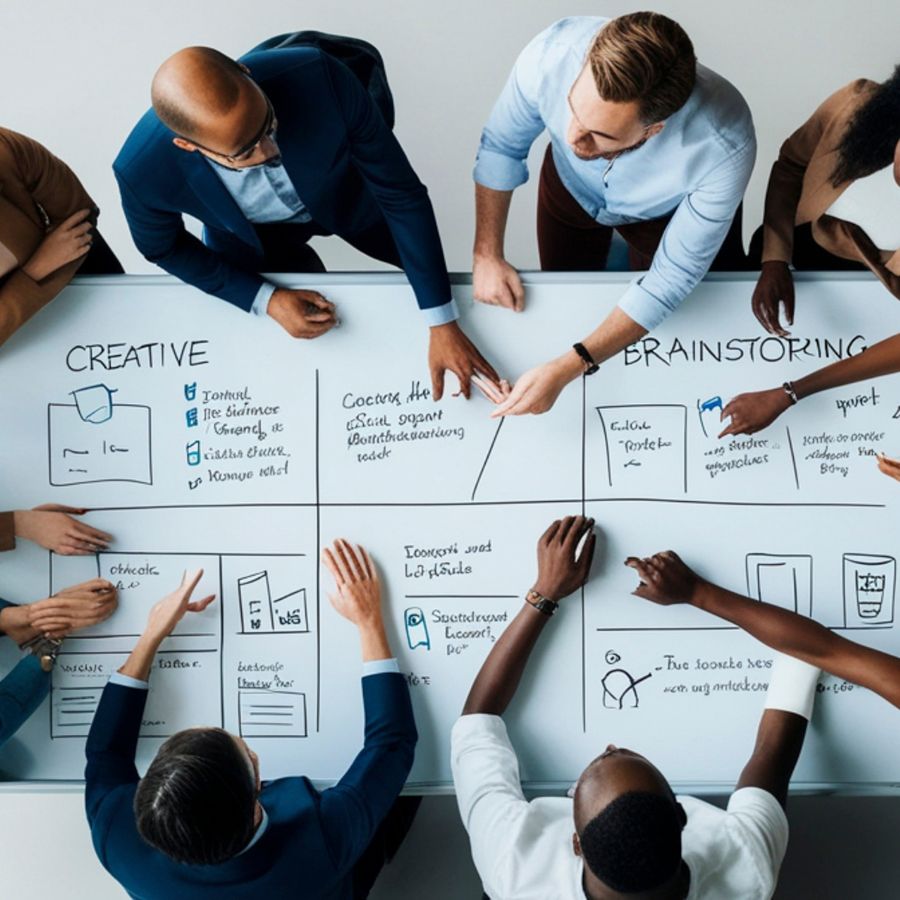
4. Make complexity visible

Use maps, frameworks and visual tools to surface assumptions, dependencies and different perspectives.
Workshops and labs often use visual tools to make relationships, assumptions, dependencies, risks, processes or stakeholder dynamics easier to see. This is where the ViR-AL® lens becomes practical: it helps the group connect direction, execution, learning and the human factor.

5. Turn discussion into outputs

Capture decisions, priorities, responsibilities, ideas and agreed next steps.
The session should not end with vague agreement. Depending on the format, outputs may include a roadmap, decision map, stakeholder map, risk register, process map, customer journey, action plan, lessons learned, team agreements or prioritized opportunities.

6. Support follow-through

Provide documented outcomes and, where useful, a follow-up review or advisory session.
Where useful, workshops and labs can include a short follow-up to review outputs, refine next steps or support implementation. This helps prevent the workshop from becoming an isolated event.
The value of a workshop is measured by what becomes clearer, decided or possible afterwards.

Let’s clarify your challenge

If you are planning a project kickoff, stakeholder session, risk workshop, process mapping session, customer experience lab, retrospective, team workshop or innovation conversation, we can start by clarifying the purpose.

Tell me about the challenge, the participants and the outcome you need. I will suggest a practical format and starting point.

Clarity creates direction. Coherence turns it into action.
Profile-picture-Perez